UTTV-s saad jälgida Tartu Ülikoolile oluliste sündmuste otseülekandeid ning leida juba toimunud ürituste salvestusi ning fotosid.
Physicumi seminar:
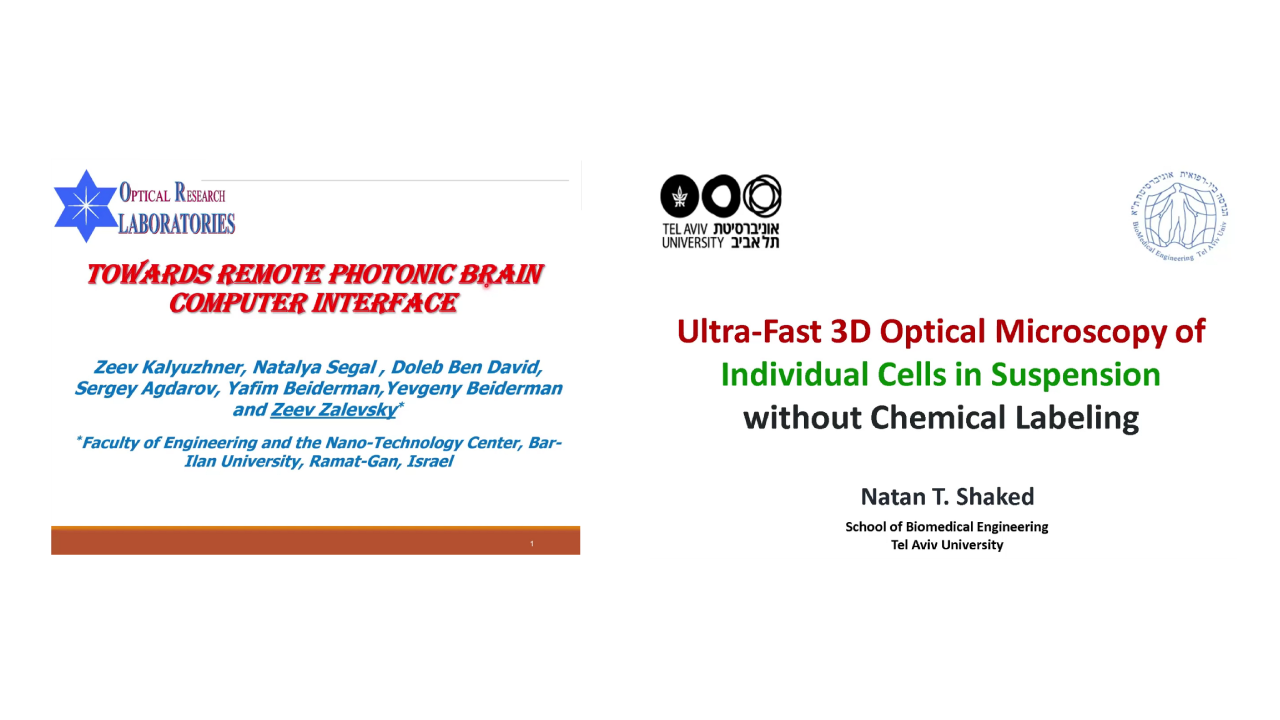
Towards remote photonic brain computer interface
Ultra-fast 3D optical microscopy of individual cells in suspension without chemical labeling
Esmaspäev, 14. september 2026 kell 16.15
Physicumi auditoorium B103 ja Zoom
Prof. Zeev Zalevsky (Bar-Ilan Ülikool)
Towards remote photonic brain computer interface
I will present a photonic sensor that can be used for remote sensing of nano-vibrations such as those associated with hemodynamic processes in our brain. This technology is based upon illuminating a surface with a laser and then using a camera with its special optics to perform temporal and spatial tracking of secondary speckle patterns in order to have nano metric accurate estimation of the movement of the back reflecting surface. The capability of sensing those movements in nano-metric precision allows connecting the movement with remote bio-sensing and with medical diagnosis capabilities.
The proposed technology was already applied for remote and continuous estimation of vital bio-signs (such as heart beats, respiration, blood pulse pressure and intra ocular pressure), for molecular sensing of chemicals in the blood stream (such as for estimation of alcohol, glucose and lactate concentrations in blood stream, blood coagulation and oximetry) as well as for sensing of hemodynamic characteristics such as blood flow to various regions of the brain. It was used in medical trials for remote medical diagnosis of various diseases such as cardio-pulmonary diseases.
The capability of sensing the hemodynamic activity when applied on the brain and when combined with advanced machine learning and AI based algorithmic allows us to detect various insights that are important for brain computer interfacing (BCI) application. For example, I will show how we detect which one out of the five senses cortices of the human brain is stimulated in a given moment, how we remotely classify the objects that a subject is looking at and thus stimulate his visual cortex (visual cortex shape recognition) only by sensing the activity at the visual cortex, how we perform remote decoding of inner speech by directing the sensor to brain’s Broca area and finally how directing the sensor to Motor cortex allows connecting our remote sensor with electrical motor and operating it with various types of movements only by thinking about them.
We believe that such an ability could initiate a breaking through era of BCI in which communication with external machinery and sensors could be done by the power of thinking and in a non-invasive manner.
Prof Natan T. Shaked (Tel Avivi ülikool)
Ultra-fast 3D optical microscopy of individual cells in suspension without chemical labeling
Label-free optical microscopy employs nondestructive approaches to visualize biomedical samples. It utilizes endogenous intrinsic signals rather than specific exogenous markers or genetic modifications, which may perturb the natural biological processes, dynamics, and responses of live cells. A major challenge in optical microscopy of live cells is achieving affordable, label-free, three-dimensional (3D), and fully quantitative measurements that provide high-resolution morphological and content-based mapping of dynamic cell populations at the single-cell level. The extent of spatial and quantitative molecular information that can be extracted by label-free techniques, encompassing not only structural but also content-based data, represents a significant advantage over conventional imaging methods. Off-axis interferometric multiplexing enables the simultaneous capture of several complex wavefronts, each encoded with a distinct interference fringe orientation, using a single camera exposure. This capability gives rise to numerous applications, particularly for imaging dynamic biomedical samples. These include field-of-view multiplexing, depth-of-field multiplexing, angular perspective multiplexing for tomographic phase microscopy in 3D refractive index imaging, multi-wavelength multiplexing for phase unwrapping or spectroscopy, super-resolution interferometric imaging with a synthetic aperture, imaging of ultrafast events, measurement of the Jones matrix and sample birefringence, and the simultaneous acquisition of multiple fluorescence microscopy channels alongside quantitative phase profiles. Each of these techniques opens new opportunities for applying wide-field interferometry to efficiently measure complex biological dynamics. One application that can particularly benefit from interferometric multiplexing is label-free imaging flow cytometry, which holds significant potential for medical diagnosis due to its ability to analyze large numbers of biological cells in flow from samples obtained from body fluids. I will present our recent results in 3D labelfree interferometric imaging flow cytometry for liquid biopsies, featuring real-time cell analysis and sorting capabilities for cancer monitoring, blood analysis, and sperm selection for in vitro fertilization.

Mälestuskonverents „Sulev Vahtre 100“
7. juulil 2026 täitus 100 aastat eesti ühe olulisema ajaloolase Sulev Vahtre sünnist. Vahtre on viljakalt uurinud paljusid erinevaid Eesti kesk- ja uusaja ajalugu puudutavaid teemasid, eriti teedrajavalt kroonikakirjutuse ajaloo ja ajaloolise demograafia alal. Kauaaegse Tartu ülikooli professorina kuulus Vahtre sovetiajal nende väheste õppejõudude hulka, kes raskete tingimuste kiuste kandsid edasi ja vahendasid üliõpilastele eesti rahvusliku iseolemise ideed. Eesti taasiseseisvumises osales ta mõjukalt ning mitmekülgselt. Eesti Vabariigi Tartu Ülikooli emeriitprofessorina jätkas ta tulemusrikkalt oma tööd Eesti ajaloo uurimisel kuni oma surmani 2007. aastal, tema suunamisel ilmus trükist uus mitmeköiteline Eesti ajaloo üldkäsitlus.
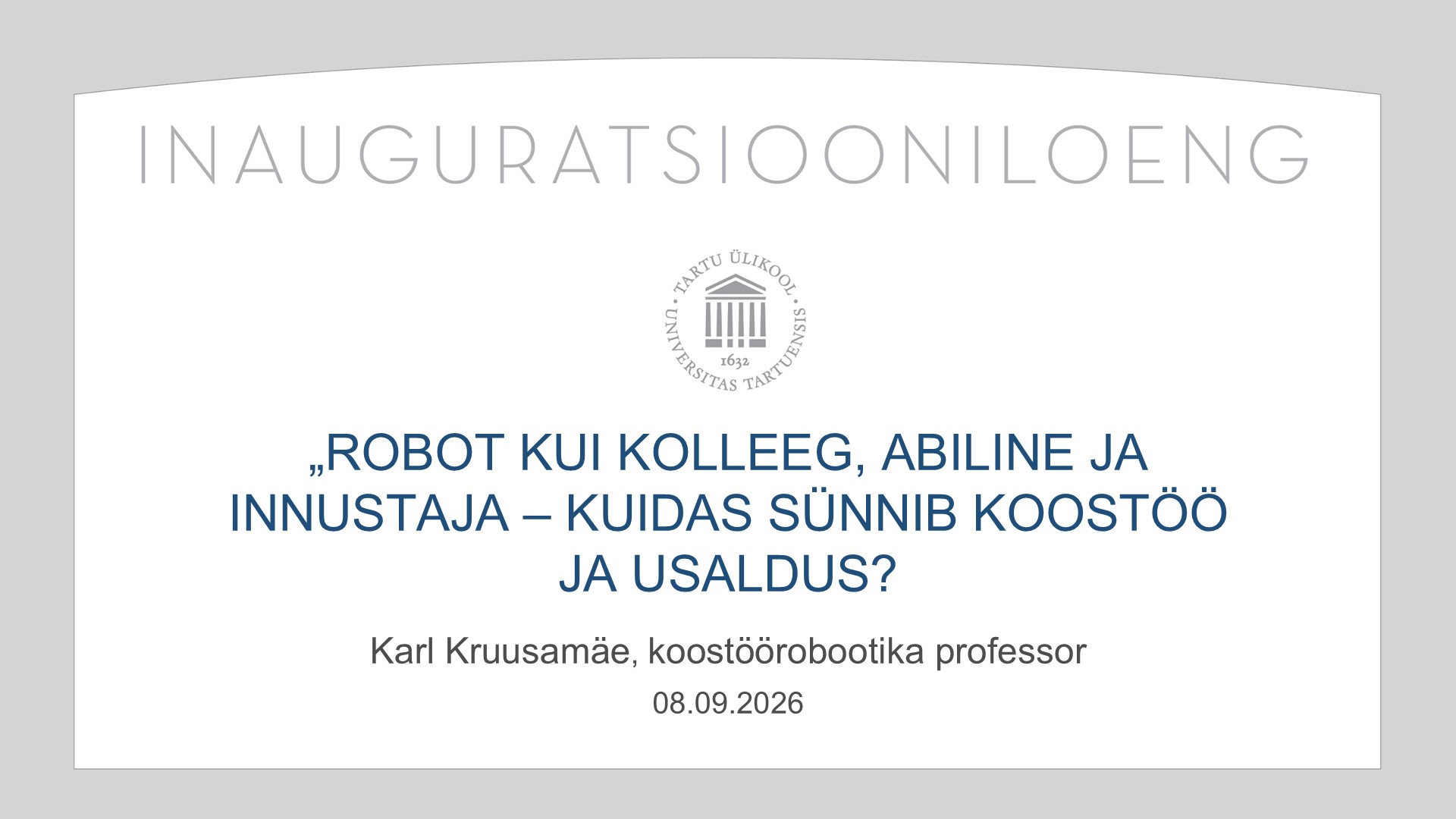
INAUGURATSIOONILOENG „Robot kui kolleeg, abiline ja innustaja – kuidas sünnib koostöö ja usaldus?" Tartu Ülikooli koostöörobootika professor Karl Kruusamäe
Robotid on jõudmas tehasehallidest meie igapäevaellu, töötades inimestega kõrvuti, abistades kodutöödes ja aidates eakatel iseseisvalt toime tulla. Vananeva ühiskonna ja süveneva tööjõupuuduse tõttu kasvab vajadus masinate järele, mis ei asenda küll inimest, kuid toetavad ja innustavad teda – olgu tegu kehaliste harjutuste, vaimu virgutava tegevuse või sujuva abiga töökohal. Ent enne kui saame lubada roboti enda ja oma lähedaste ellu, peab tekkima usaldus inimese ja tehnoloogia vahel. Karl Kruusamäe arutleb inauguratsiooniloengul, kuidas selline usaldus sünnib. Ta räägib lähemalt inimese ja roboti koostoimest ning tõhusate inimese-roboti tiimide kujunemisest; sotsiaalsest robootikast, mis aitab inimesel püsida aktiivne ja tegus; ning vabast riistvarast, mille puhul on roboti ehitus kõigile nähtav, taasloodav ja kontrollitav. Just läbipaistvus võib aidata jõuda tehnoloogiani, mida ühiskond saab päriselt usaldada. Karl Kruusamäe on omandanud Tartu Ülikoolis tehnikateaduse magistrikraadi infotehnoloogias (2008) ja doktorikraadi füüsikas (2012). Doktoritöö raames töötas ta välja mudelid pehmerobotites kasutatavate täiturite täpsemaks juhtimiseks tagasiside abil. Järeldoktorina tegi ta teadustööd Jaapani tööstusliku teaduse ja tehnoloogia riiklikus instituudis (AIST). Kruusamäe on töötanud ka külalisteadurina Texase Ülikoolis Austinis. Alates 2016. aastast on ta Tartu Ülikoolis juhtinud robootikaalast teadus- ja õppetööd, esmalt dotsendi ja kaasprofessorina ning 2026. aastast koostöörobootika professorina. Tema teadustöö keskmes on inimkeskne robootika: inimese ja roboti koostöö, mitme roboti juhtimine ning avatud lähtekoodiga riistvara arendus. Ta on avaldanud üle 70 eelretsenseeritud teaduspublikatsiooni ning osalenud kümnetes rahvusvahelistes ja riigisisestes robootikaprojektides, millest mitut on ta ka juhtinud. Lisaks teadustööle edendab ta pühendunult robootikat ja inseneriharidust, innustades järgmist põlvkonda robootikainsenere ja teadlasi.